The Ultimate Guide to Data Collection Methods for Smarter Business Decisions
Are you struggling to understand what your customers, employees, or students really need? In an increasingly data-driven world, choosing the right data collection methods can significantly impact your ability to make informed decisions. Whether you’re a business owner, HR professional, educator, product manager, or event planner, reliable data collection methods help you gather accurate insights that drive success in 2026 and beyond.
In this comprehensive guide, we’ll explore the most effective data collection methods, when to use them, and how to apply them across various industries. You’ll also learn practical tips, examples, and best practices that will help you elevate your decision-making process.
What Are Data Collection Methods?
Data collection methods are systematic approaches used to gather information for analysis. They allow organizations to measure behavior, preferences, opinions, and performance. With the right data collection strategy, you can improve processes, enhance customer experiences, make better product decisions, and streamline operations.
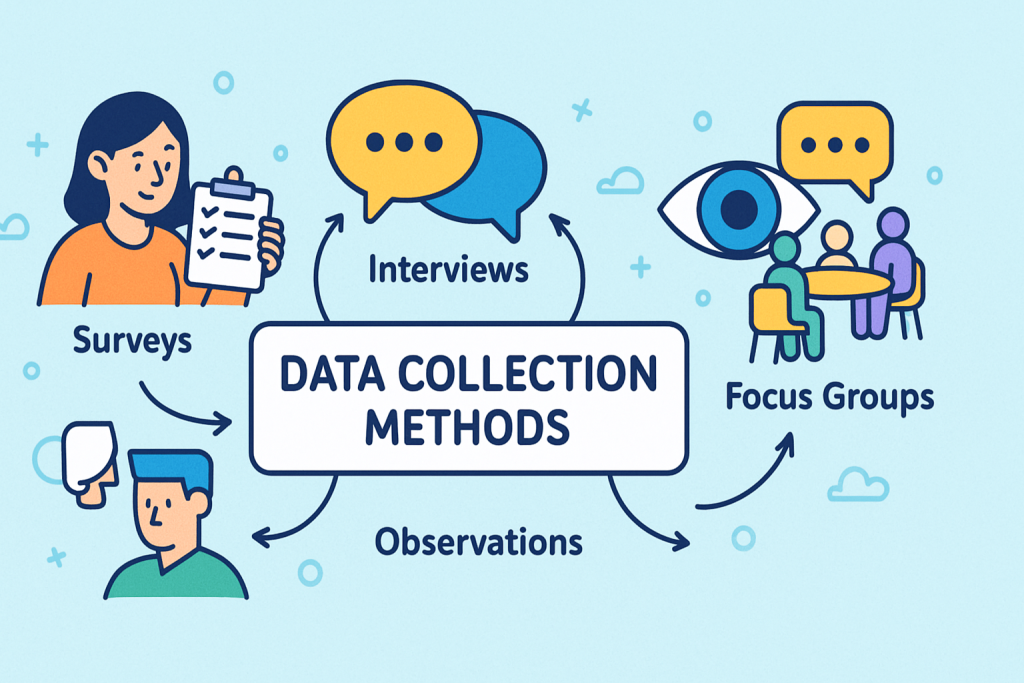
Modern data collection involves both qualitative and quantitative techniques, ranging from surveys and interviews to digital tracking and automated tools.
Why Data Collection Methods Matter
Understanding data collection is crucial because it helps organizations:
Identify trends
Improve products and services
Enhance customer satisfaction
Make evidence-based decisions
Reduce risk and uncertainty
Without the right data, businesses rely on assumptions—and assumptions can lead to costly mistakes.
Types of Data Collection Methods
Data collection methods fall into two main categories: primary and secondary. Each offers unique advantages depending on your goals.
Primary Data Collection Methods
Primary methods involve collecting data directly from the source. They help organizations gather up-to-date, specific information.
1. Surveys and Questionnaires
Surveys are one of the most popular data collection methods.
Best for:
Customer feedback
Employee engagement
Event registration
Product research
Advantages:
Cost-effective
Easy to distribute
Can reach global audiences
Quantitative and qualitative insights
Tools like FormBot make it simple to build dynamic surveys with conditional logic and automation.
2. Interviews
Interviews provide deeper, more detailed insights.
Types:
Structured (predefined questions)
Semi-structured
Unstructured (open conversation)
Best for:
UX research
Employee evaluations
Course feedback
Event debriefs
Interviews allow you to explore emotions, reasoning, and motivations.
3. Observations
Observation involves watching behaviors in real-world settings.
Best for:
Product usability tests
Classroom interactions
Workplace efficiency analysis
Advantages:
Real-time insights
Avoids self-reporting bias
4. Focus Groups
A small group of participants discusses a topic guided by a moderator.
Best for:
Product testing
Branding feedback
Event experience reviews
Focus groups uncover group dynamics, preferences, and shared opinions.
5. Experiments
Controlled tests used to measure cause-and-effect relationships.
Best for:
Product optimization
Onboarding flow testing
Training effectiveness
Experiments provide highly reliable data.
Secondary Data Collection Methods
Secondary methods analyze existing data rather than collecting new information.
1. Industry Reports
Businesses often use data from market research firms.
2. Academic Studies
Researchers rely on peer-reviewed articles for evidence.
3. Internal Records
Examples include:
Sales reports
HR databases
Customer service logs
4. Online Analytics
Digital analytics tools track:
user behavior
website performance
event participation
Secondary methods save time and provide historical insights.
Qualitative vs. Quantitative Data Collection Methods
Understanding the difference helps you choose the right technique.
Qualitative Data Collection
Explores opinions, feelings, and motivations.
Examples:
interviews
focus groups
open-ended surveys
Best for:
understanding “why” people behave a certain way
exploring new ideas
Quantitative Data Collection
Focuses on numerical data for statistical analysis.
Examples:
polls
scaled surveys
experiments
Best for:
measuring patterns and predictions
comparing large groups
How Different Industries Use Data Collection Methods
1. Business Owners
Businesses rely on data collection methods to:
Evaluate customer satisfaction
Test new product features
Analyze operations
Predict market trends
Consistent data helps companies improve retention and revenue.
2. Product Managers
Product managers use data to validate decisions.
They collect data through:
user interviews
A/B testing
analytical tools
beta tester surveys
This ensures the product meets customer needs.
3. Educators & Course Creators
Educators gather data to:
Improve curriculum
Measure learning outcomes
Understand student needs
Methods include quizzes, assessments, and live feedback.
4. Event Planners
Event professionals depend on data to:
Estimate attendance
Personalize sessions
Improve future events
Gather post-event feedback
RSVP forms, surveys, and analytics tools help refine event experiences.
5. HR Professionals
HR teams use data collection methods for:
onboarding
performance reviews
employee engagement
training evaluation
Accurate data boosts workplace satisfaction and productivity.
Examples of Effective Data Collection Methods
Here are some practical examples you can apply today.
Customer Satisfaction Survey
NPS score
rating scales
open-ended questions
Employee Feedback Forms
training assessments
onboarding surveys
Event Feedback Forms
satisfaction ratings
speaker evaluation
Product Testing Forms
feature preference
usability scoring
Choosing the Right Data Collection Method
Selecting the right approach depends on your goals.
Ask yourself:
What type of data do I need—qualitative or quantitative?
Who is my audience?
How much time do I have?
What tools are available?
Do I need long-term or instant insights?
General Guidelines
Use surveys for large groups.
Use interviews for deeper insights.
Use forms for structured data.
Use analytics for digital behaviors.
Benefits of Using Digital Tools for Data Collection
Modern digital tools enhance how organizations gather and analyze data.
Major Benefits
Automation
Real-time reporting
Mobile-friendly access
Reduced human error
Improved consistency
Data integration with CRM and HR tools
Platforms like FormBot offer drag-and-drop builders, conditional logic, templates, and analytics to simplify the entire process.
How to Improve Your Data Collection Process
Here are actionable tips to strengthen your workflow.
1. Define Clear Objectives
Know what you want to measure before selecting a method.
2. Keep Forms Short and Simple
Short questions = higher response rates.
3. Use Multiple Data Collection Methods
Combining qualitative and quantitative data improves accuracy.
4. Test Your Forms
Run a test before launching to ensure clarity.
5. Protect User Privacy
Use secure tools and avoid unnecessary personal data.
6. Analyze Results Quickly
Data loses value if not used promptly.
Best Practices for Data Collection in 2026
To stay ahead, organizations should:
Use AI-powered analytics
Embrace automation
Implement mobile-first designs
Improve accessibility for global audiences
Offer multilingual options
Use visual dashboards for decision-making
Data collection is evolving—keep your processes modern and adaptive.
Common Mistakes to Avoid
Avoid these errors to improve data quality.
1. Asking Leading Questions
Keep questions neutral.
2. Collecting Too Much Data
Only collect what you truly need.
3. Using Unclear Instructions
Provide context for each question.
4. Ignoring Data Validation
Ensure fields are formatted correctly.
5. Not Acting on Data
Data without action offers no value.
FAQ: Data Collection Methods
1. What are the most commonly used data collection methods?
Surveys, interviews, observations, focus groups, experiments, and analytics are widely used across industries.
2. Which data collection method is the most accurate?
Experiments and structured interviews tend to produce highly reliable results, but accuracy depends on your objectives.
3. What tools help with data collection?
Popular tools include online form builders, survey platforms, CRM systems, and analytics tools.
4. How do I choose between qualitative and quantitative methods?
Choose qualitative when exploring opinions, and quantitative when measuring trends or validating decisions.
5. Are digital data collection methods better than traditional methods?
Yes—digital methods are faster, more organized, and easier to analyze.
Conclusion
Choosing the right data collection methods is essential for making smarter, evidence-based decisions across every industry. Whether you’re planning events, building products, teaching courses, or managing employees, the right techniques help you gather insights that matter.
If you want a faster, easier way to collect and analyze data, it’s time to upgrade your tools.
👉 Start building powerful data collection forms today:
https://platform.formbot.com/register/
Get Started and Create Forms for Free?
 (1 votes, average: 5.00 out of 5)
 Loading...